
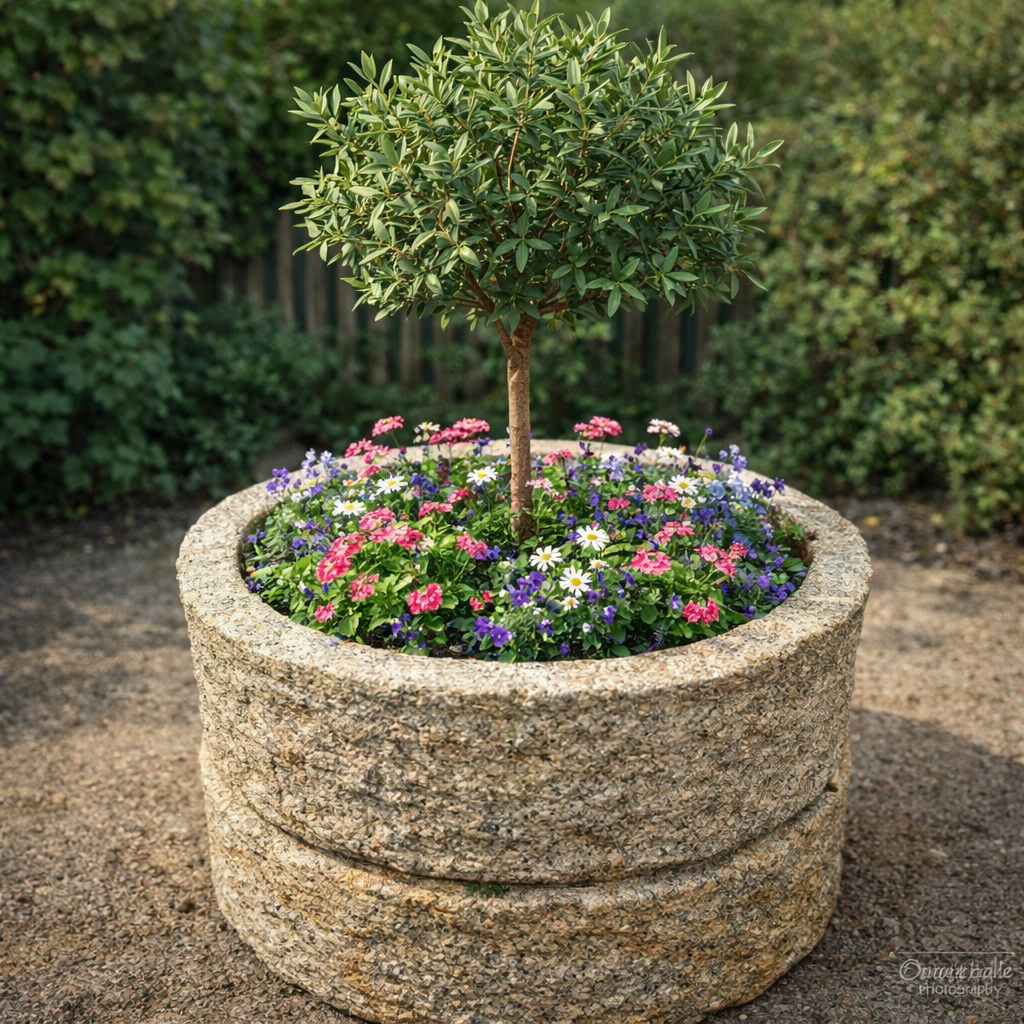
There is something special about a granite trough planter. Once a practical feature of working farms and rural properties, these heavy stone troughs have found a new place in contemporary UK gardens. What was once used for livestock or utility is now admired for its character, durability, and unmistakable sense of permanence.
In a world of mass-produced plastic pots and short-lived timber planters, granite troughs offer something entirely different. They feel established from day one. They have weight, texture, and history. Whether placed in a courtyard, on a patio, beside a driveway, or within a larger landscaping scheme, they create an instant focal point that feels both rustic and refined.
For homeowners looking for decorative garden ideas in the UK, granite trough planters are one of those rare features that can suit both traditional country gardens and more contemporary outdoor spaces. They are practical, beautiful, and built to last.
Why Choose Granite Troughs?
When choosing planters for an outdoor space, appearance matters, but so does longevity. Granite is one of the most durable natural materials you can introduce into a garden, which is a big part of its appeal.
Exceptional durability
Unlike plastic planters that can fade, crack, or become brittle over time, granite is naturally robust. It can cope with the changing British weather, from summer heat to winter frost, without losing its integrity.
Freeze/thaw resistance
One of the biggest benefits of granite in UK gardens is its ability to handle wet and cold conditions. Frost can be damaging to lower-quality materials, but granite is well suited to outdoor use throughout the year, making it a reliable long-term investment.
Low maintenance
Granite trough planters require very little upkeep. They do not need painting, staining, or replacing every few years. A simple clean now and then is usually enough to keep them looking their best.
Timeless natural appearance
The beauty of granite lies in its texture, tone, and authenticity. It complements a wide range of materials, from reclaimed timber and traditional stone to modern paving and clean-lined landscaping. Rather than dating quickly, granite tends to look better as the garden matures around it.
Granite Trough Planters in Contemporary UK Gardens
Granite troughs work especially well in modern garden design because they bring texture and age to newer landscapes. In a freshly designed outdoor space, they can stop everything feeling too new or too uniform. They add contrast and visual weight, helping a garden feel grounded and more established.
This is one of the key reasons why they have become so popular again. They bring together heritage and practicality. A granite trough nods to the past, but it also fits beautifully into today’s gardens, where homeowners want natural materials, long-lasting quality, and features that feel individual rather than off-the-shelf.
No two granite troughs ever feel exactly the same. That uniqueness is a major part of their charm. Compared with standard timber or plastic planters, a granite trough has far more presence and personality.
Design Ideas and Use Cases
One of the best things about granite trough planters is how versatile they are. They can be used in all sorts of ways depending on the size of the trough and the style of the garden.
Large planters for flowers and vegetables
Granite troughs make excellent statement planters for seasonal flowers, herbs, ornamental grasses, or even small vegetable displays. They look particularly effective planted generously, allowing the arrangement to soften the edges of the stone.
Lavender, rosemary, trailing ivy, geraniums, salvia, and ornamental cabbage can all work beautifully depending on the season and setting.
Raised beds with character
For smaller gardens, courtyards, or kitchen garden areas, granite troughs can act as compact raised beds. They are ideal for herbs, salad leaves, alpine plants, or carefully curated flower displays. Because they lift planting off the ground, they can also make a space feel more structured and easier to maintain.
Decorative water features or mini-pond bases
A granite trough can also be repurposed as a striking water feature. Filled with water and planted with aquatic varieties, or used as the base for a simple bubbling feature, it adds movement and reflection to the garden while keeping a natural, understated look.
Statement pieces on patios, driveways, and in courtyards
Used on their own, granite trough planters can create impact without needing much else around them. A single large trough positioned at an entrance point, along a driveway, or in the centre of a courtyard can anchor the whole design and provide a strong visual focal point.
Pairing with patios and landscaping
Granite troughs look particularly effective when paired with other natural materials. They work beautifully alongside stone patios, reclaimed sleepers, granite setts, gravel paths, and garden walls. When used well, they help tie separate elements of the garden together and create a more cohesive overall feel.
Size, Shape and Finish Options
Granite trough planters come in a range of sizes and styles, which means they can be used in both compact and larger gardens.
Round and rectangular troughs
Rectangular troughs are often the most versatile option. They suit patios, pathways, boundaries, and driveway edges, and they work especially well when planted in a more structured way.
Round troughs can feel softer and more sculptural, making them ideal for feature planting or central focal points.
Rough-hewn or more refined finishes
Some granite troughs have a more rugged, timeworn look, which works well in traditional gardens or country properties. Others have a cleaner finish that suits contemporary landscaping schemes. The best choice usually depends on the surrounding materials and the overall style of the space.
Drainage matters
Whichever style you choose, drainage is important. If the trough is being used as a planter, it needs suitable drainage so that roots do not become waterlogged. A layer of drainage material at the base can also help support healthy planting and improve long-term performance.
How to Style a Garden Around a Granite Trough
Because granite troughs are naturally eye-catching, it is worth thinking about how the wider garden design supports them.
Planting ideas
For a classic country look, softer planting works beautifully. Try lavender, nepeta, rosemary, foxgloves nearby, and trailing varieties that spill gently over the edge. For a more contemporary scheme, consider architectural plants, ornamental grasses, or clipped planting with more defined shapes.
Pairing with paths, patios, and walls
Granite troughs sit comfortably alongside natural paving and structural garden features. Positioning one near a stone path, within a gravel courtyard, or against a textured wall can make the whole garden feel more considered and balanced.
Seasonal interest
These planters are ideal for changing displays through the year. In spring, bulbs such as tulips, narcissus, and muscari bring fresh colour. In summer, perennials, herbs, and flowering annuals create fullness and softness. In autumn and winter, evergreen planting, heather, and ornamental foliage can keep the display looking attractive even in colder months.
Practical Matters: Delivery and Installation
Granite trough planters may look effortless once installed, but they do require some planning.
Weight and handling
Granite is extremely heavy, which is part of its appeal, but it also means installation needs to be considered properly. These are not items you casually move around the garden once filled, so it is important to decide on the position in advance.
Delivery logistics
Because of their weight, granite troughs are typically delivered via pallet-based transport. Access, unloading arrangements, and the final distance from drop-off point to installation area should all be considered beforehand.
Ground preparation
A granite trough needs a firm, level base. Depending on the size and intended use, this could be compacted ground, a prepared gravel base, or a solid paved surface. Proper preparation helps the trough sit securely and reduces the risk of movement over time.
Filling and ongoing care
Before planting, it is worth adding suitable drainage material and high-quality compost or soil depending on what you are growing. Once in place, maintenance is minimal. The stone itself needs very little attention, and routine plant care will do most of the work.
Cost vs Value: Why Granite Is Worth It
Granite trough planters are not the cheapest garden option, but they are one of the most enduring. When compared with timber or plastic alternatives, the long-term value becomes much clearer.
Cheaper planters may need replacing after only a few seasons. Granite, on the other hand, can last for decades. It does not demand ongoing treatment, it retains its appearance exceptionally well, and it continues to add character year after year.
There is also the visual value to consider. A granite trough does not just hold plants; it contributes to the overall style and quality of the garden. It makes outdoor spaces feel more established, more considered, and more premium.
For many homeowners, that makes it a worthwhile investment. It is a practical garden feature, but it is also a design choice that can enhance the appeal of the property as a whole.
A Garden Feature That Lasts
Granite trough planters have come a long way from their agricultural origins, but perhaps that is exactly why they remain so appealing. They were built to last, and they still offer that same sense of strength and purpose today.
In modern gardens, they bring together function, history, and style in a way few other planters can. Whether used for flowers, herbs, raised planting, or as a standout decorative feature, they add permanence and individuality to outdoor spaces.
If you are looking for granite trough planters in the UK that offer both beauty and practicality, they are a superb choice for gardens that deserve something more distinctive than the ordinary.
FAQs
Are granite trough planters suitable for UK weather?
Yes, granite is an excellent choice for UK gardens because it is durable, low maintenance, and well suited to wet, cold, and changing weather conditions.
What can I plant in a granite trough?
Granite troughs can be used for flowers, herbs, grasses, seasonal bulbs, vegetables, and even small shrubs depending on their size and drainage setup.
Do granite troughs need drainage holes?
If the trough is being used as a planter, proper drainage is important. This helps prevent waterlogging and keeps plants healthier over time.
Are granite trough planters hard to move?
Yes, they are very heavy, which is why planning the final position before delivery and installation is important.
Do granite trough planters suit modern gardens?
Absolutely. Granite troughs work beautifully in both traditional and contemporary settings thanks to their natural texture, timeless appearance, and ability to complement stone, timber, and paving.
Are granite troughs worth the cost?
For many homeowners, yes. Their long lifespan, low maintenance, and strong visual appeal make them a worthwhile long-term investment for the garden.